Self-Storage · Question answered
How Do I Evaluate Self-Storage in Texas?
Self-storage looks simple from the outside. Real evaluation means physical vs economic occupancy, competition, and honest operating math.
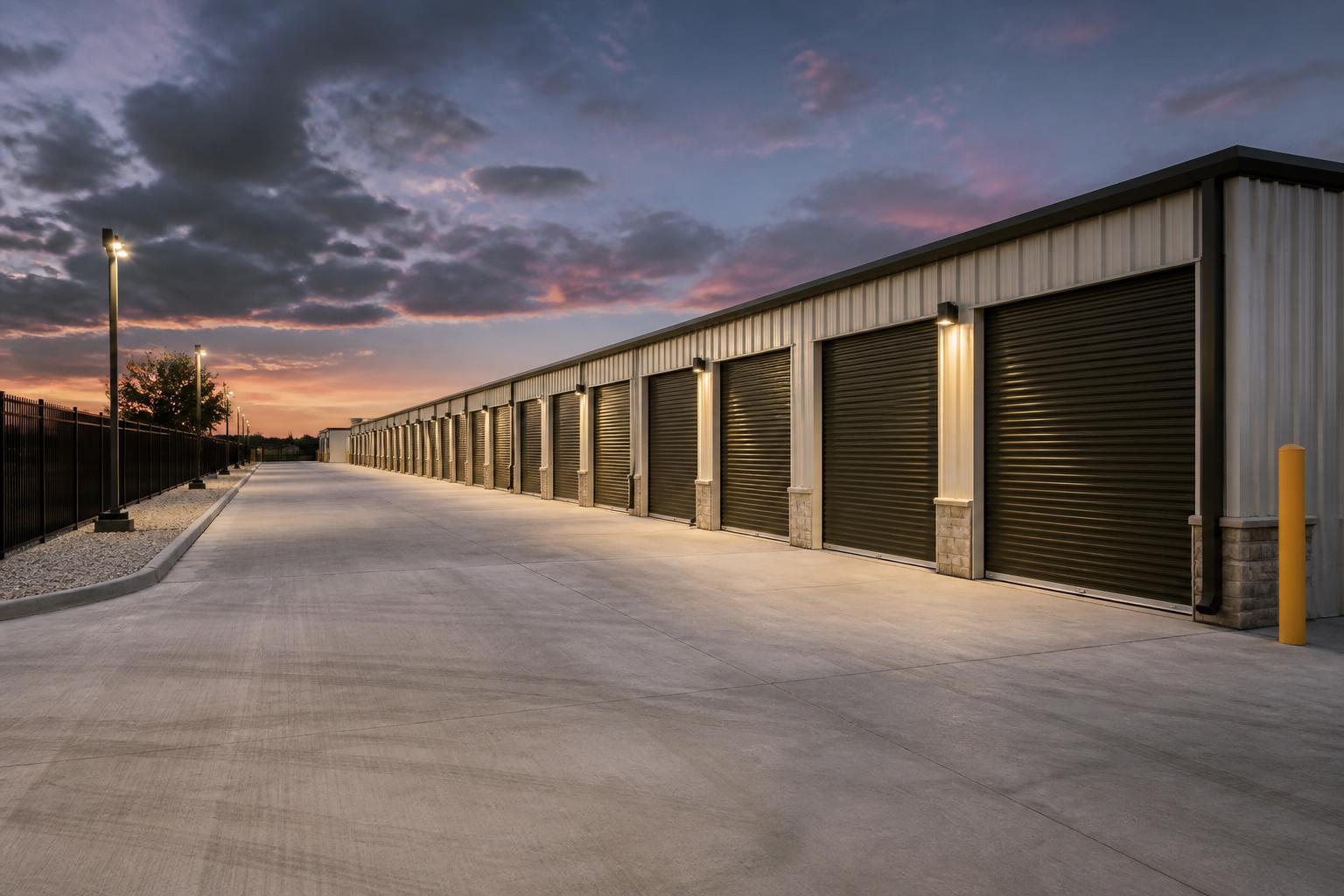
Short answer
The direct answer.
Evaluating a Texas self-storage facility means separating physical occupancy from economic occupancy, comparing rates to nearby competitors, understanding unit mix and demand, and reviewing real operating expenses. Look at deferred maintenance, security, access, management model, and expansion potential. The best deals usually have measurable room to improve rates, tighten operations, or add units — not just 'stabilized income' at market.
Why it matters
Self-storage looks like a simple asset class, which is why beginners overpay for it. The details — physical vs economic occupancy, discounts, delinquency, and true expense loads — often tell a very different story than the marketing summary.
Texas storage demand varies dramatically by submarket. A facility with 90% physical occupancy in an oversupplied market may be earning far less per square foot than a smaller facility in an undersupplied one.
What to Review on a Storage Deal
Ask for physical occupancy (units occupied ÷ units total), economic occupancy (actual rent collected ÷ potential rent at market), unit mix, current street rates, in-place rates, discounts, delinquencies, and last 24 months of income statements.
Walk the site. Look at security, gate operations, lighting, drainage, unit condition, and deferred maintenance. Check nearby competitors — their rates, availability, and any new supply under construction. Ask how management is structured: on-site vs remote, kiosk vs staffed.
Self-Storage Metrics That Matter
| Metric | What to Review | Why It Matters |
|---|---|---|
| Physical occupancy | Units rented ÷ units total | Shows utilization, not revenue |
| Economic occupancy | Rent collected ÷ potential rent at market | Reveals discounting and delinquency |
| Unit mix | Sizes and climate control availability | Drives demand and rate |
| Street rates vs in-place rates | Room to raise existing tenants | Signals rate upside |
| Competition | Nearby facilities, rates, and new supply | Bounds pricing power |
| Expenses | Payroll, utilities, insurance, property tax | Verifies real NOI |
| Deferred maintenance | Roofs, doors, drainage, paving | Hidden capital needs |
| Expansion | Room to add units on-site | Value-add opportunity |
San Antonio / Hill Country example
Example: 90% Physical, 74% Economic
A Texas facility markets 90% physical occupancy. Digging in: economic occupancy is 74% because of heavy first-month-free promotions, an 8% delinquency, and street rates 15% below competitors. In-place rents are also 12% below street.
That's not necessarily a bad deal — it's an opportunity to tighten collections, reduce discounts, and step up rents over time. But it's a different underwriting than 'stabilized 90% occupancy.' Buying at a stabilized cap rate here would overpay for the actual current income.
Common mistakes
- Treating physical occupancy as economic occupancy.
- Ignoring new supply under construction within a 3–5 mile radius.
- Underestimating payroll, insurance, and property tax.
- Overpaying for 'upside' that requires perfect execution against real competitors.
When to ask for help
- You want a written read on a specific storage facility before writing an offer.
- You want help evaluating the competitive submarket and new supply pipeline.
- You need to pressure-test a broker's or seller's stated occupancy and rate story.
FAQs
Frequently asked questions.
What is physical occupancy?
The percentage of units currently rented. It measures utilization, not revenue.
What is economic occupancy?
Rent actually collected divided by potential rent at current market rates. It captures the impact of discounts and delinquency.
How do I compare storage facility rates?
Check street rates across nearby competitors for the same unit sizes and climate control, then compare with the subject facility's in-place rents.
What expenses does self-storage have?
Property tax, insurance, payroll (or management fee), utilities, marketing, repairs, gate and software fees, and reserves for roofs, doors, and paving.
What makes a self-storage deal risky?
Overpaying at market cap rate, ignoring new supply, buying a facility with heavy deferred maintenance, or underestimating expenses.