Deal Analysis · 8 min read · Updated June 2026
How to Analyze an Income-Producing Property Before Making an Offer
The offer is the moment the deal is won or lost. By the time you sign, you should already know what the property earns, what it costs to run, and how it performs under stress. This is the framework I use with investor buyers before recommending an offer price.
Step 1 — Validate the income
Pull the current rent roll, T-12, and lease copies. Compare contract rents to market rents using three live comparables, not Zillow estimates. Note any concessions, free months, or below-market leases.
If income data is missing or sloppy, treat that as diligence information. Sellers with clean books usually run cleaner properties.
Step 2 — Rebuild the expenses
Don't trust the seller's expense ratio. Rebuild taxes (re-assessed), insurance (quote, don't assume), management, repairs/maintenance, CapEx reserve, utilities, and any payroll.
Most amateur pro formas underweight CapEx and management. Bake both in at realistic numbers even if you self-manage today.
Step 3 — Layer the debt
Use real lender quotes: rate, amortization, term, prepay. Model both your base case and a -10% rent / +15% expense stress case. A deal that breaks under stress is a deal that needs a better price.
Next read: Deal Analysis 101: Cap Rate, Cash-on-Cash, and NOI Explained
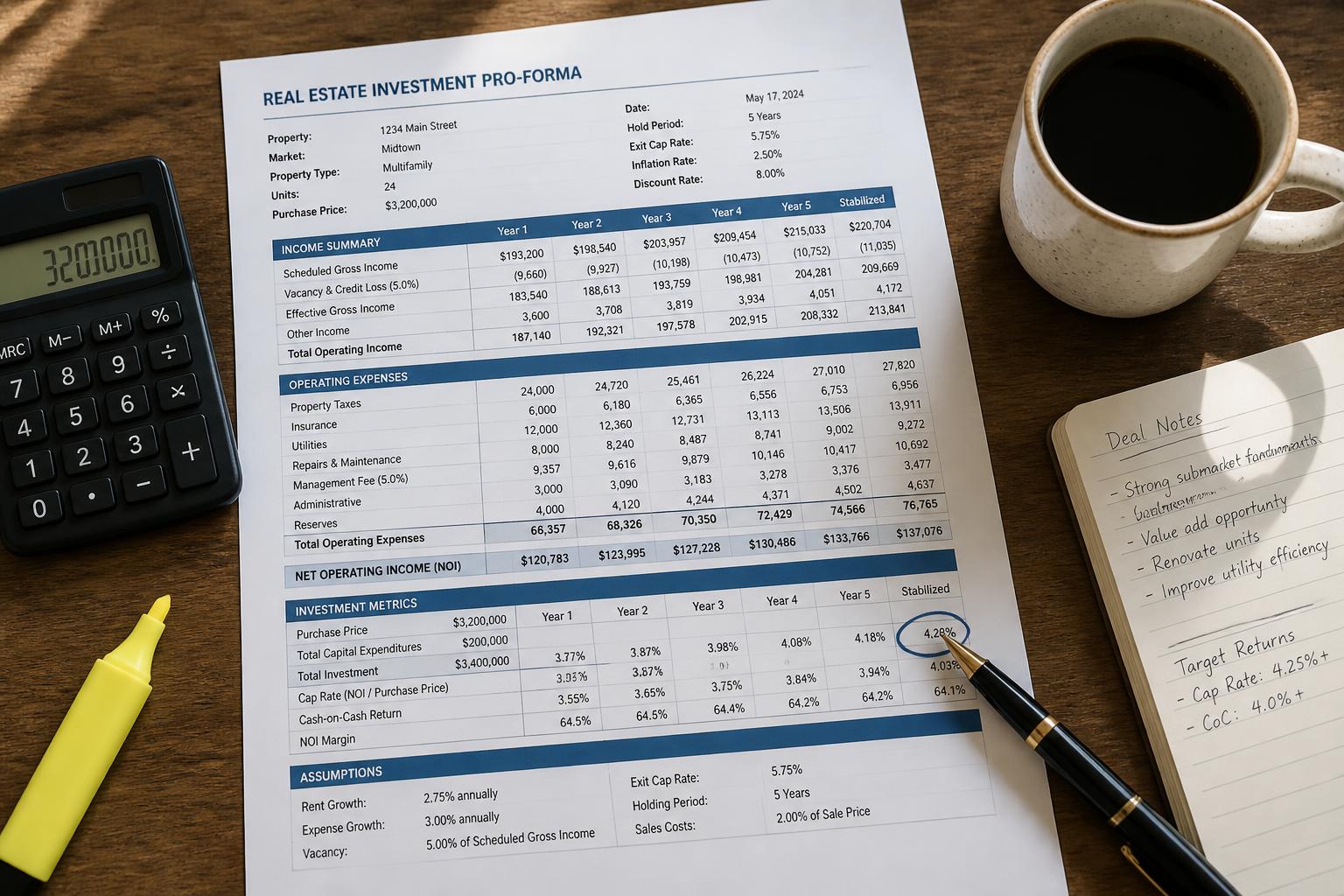
Step 4 — Compute the returns that matter
NOI, cap rate, cash-on-cash, debt-service coverage, and a five-year IRR if you can. Compare to your alternative uses of capital — not to a generic market benchmark.
Step 5 — Walk the property and reconcile
The model lies; the walk-through tells the truth. Compare the building's condition to your CapEx reserve and the rent roll to what you see in the units. Adjust your offer, not your assumptions.
Next read: Deal Analysis 101: Cap Rate, Cash-on-Cash, and NOI Explained
The 30-minute pre-offer analysis that saves you from bad deals
A pre-offer analysis is not a full underwriting model — it is a fast screen that answers one question: is this property worth the two hours I'm about to spend on the real underwriting? Done right, it takes 30 minutes and catches 80% of the deals that look great in the listing photos but fail on the numbers.
Start with income. Verify the stated rent against a comparable-rent search in the same submarket — not the same city, the same one-mile radius. If the seller's rent roll is 15% above market, treat the property as vacant and re-run the numbers at achievable rents. Sellers price on their rent roll; you buy on the rent roll the next tenant will sign.
Then hit the three under-modeled expenses: property taxes reassessed to your likely purchase price, a fresh insurance quote for the specific address (not a Zillow estimate), and a realistic capital-expense reserve based on roof age, HVAC age, and plumbing type. Add those to normal operating expenses and compare NOI to asking price. If cap rate is inside 100 basis points of the risk-free treasury yield, walk away — you are not being paid for the risk.
Key takeaways
What to remember.
- Validate income with live comps, not online estimates.
- Rebuild expenses from scratch every time.
- Stress-test debt and rent before you offer.
- Walk the property and reconcile to your model.
FAQs
Frequently asked questions.
How long should pre-offer analysis take?
For a stabilized small rental, 60–90 minutes once you have the data. Commercial, storage, and RV parks usually take 3–6 hours of focused work before a credible offer.
What's the most common mistake new investors make?
Trusting the seller's expense ratio and missing the re-assessed property tax line. Together those errors create the bulk of disappointed first-year cash flow.
Do I need a CPA or partner to analyze a deal?
Not for the operating model. For tax structuring and entity choice, yes — bring in a CPA before closing the first deal.