Selling Investment Property · 8 min read · Updated June 2026
How to Price an Income-Producing Property
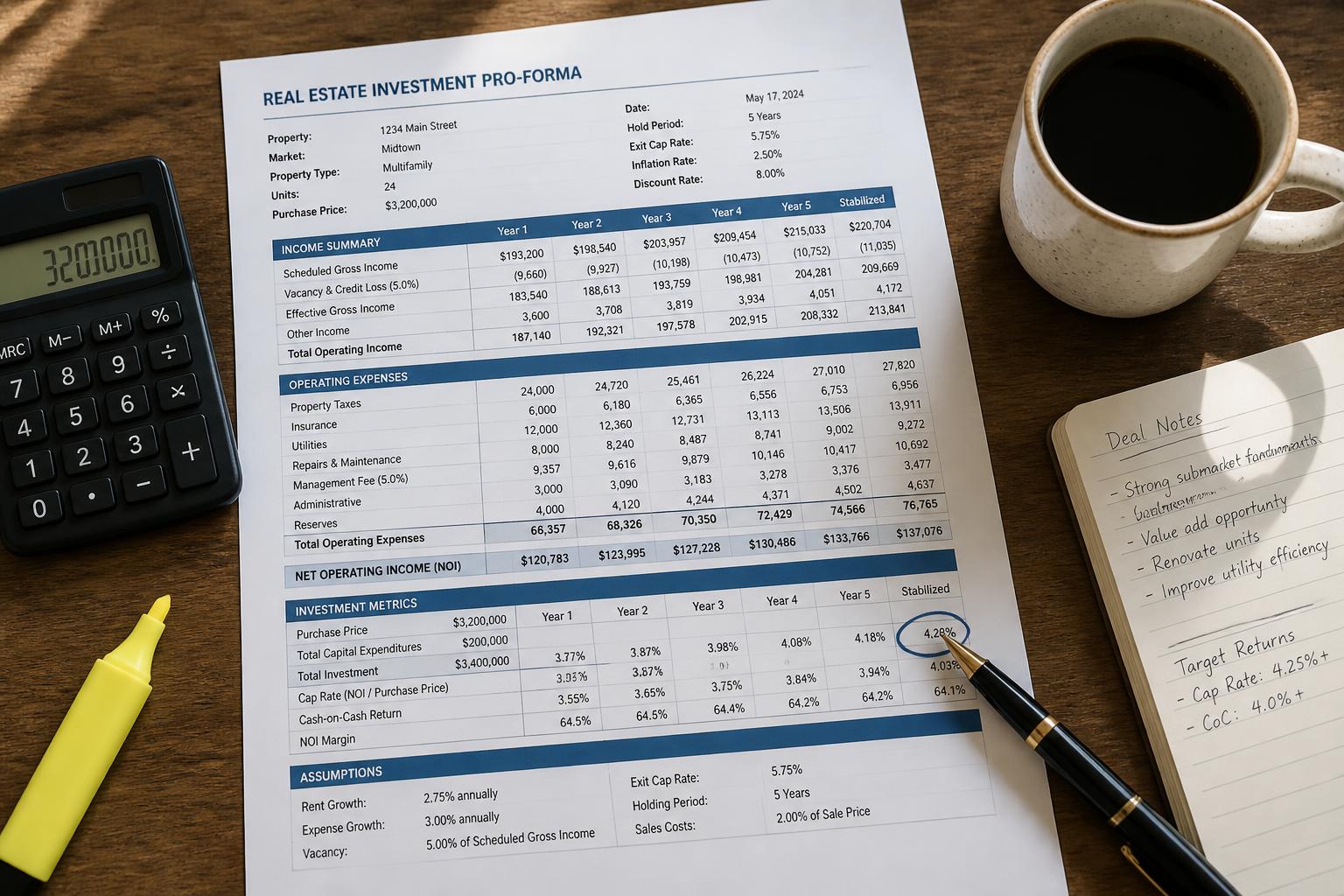
Pricing a rental, small multifamily, or commercial property is not the same exercise as pricing a single-family home. Investors lead with the numbers — net operating income, cap rate, and reasonable comparable sales — and the price you set should reflect those inputs, not just neighborhood comps. This guide walks through how I price income property for sellers in San Antonio and the Texas Hill Country.

1. Start with verifiable income
Pull the lease, current rent roll, last 12 months of bank deposits, and any utility reimbursements. Investor buyers will verify; sellers who lead with clean income data set the tone.
If actual rent is below market, you'll face a choice: price on actuals (lower) or price on pro forma (higher and slower to close).
2. Strip operating expenses honestly
Real expenses: property taxes at the reassessed value, insurance at current quote, management at 8–10% even if you self-manage, repairs and maintenance at 5–10% of gross rent, plus reserves for capital items.
Skipping expenses to inflate NOI is the fastest way to lose investor buyers during diligence. The contract dies; you relist below your original number.
3. Apply the right cap rate for the submarket and asset
Cap rates are local and asset-specific. San Antonio small multifamily often trades in a 5.5–7.0% range; stabilized single-family rentals trade closer to retail value than to a cap-rate calculation; self-storage and RV parks have their own ranges.
A REALTOR® working investor inventory in your market should be able to give you a defensible cap range with recent comparable sales, not a guess.
Next read: Selling a Property With Tenants in Texas
4. Cross-check with comparable sales
Income-based valuation tells you what investors will pay. Comparable sales tell you what the market has paid. The right price usually sits where the two overlap.
For 1–4 unit residential, owner-occupant comps may exceed investor pricing — which means a vacant sale could outperform an occupied sale.
5. Identify the right buyer pool
Who buys this property? An investor scaling a rental portfolio, a 1031-exchange buyer with a deadline, an owner-occupant who wants the upstairs unit, or a small commercial operator? Each pool prices differently.
Pricing follows pool. Marketing follows pricing.
Next read: Selling a Property With Tenants in Texas
6. Price with negotiation room — not optimism
A defensible price grounded in NOI, cap rate, and comps gives you room to negotiate without collapsing. An aspirational price gets stale, draws low offers, and signals weakness to investor buyers.
Most investor offers come in at 92–98% of a well-justified ask. Plan accordingly.
7. Revisit the price if it's not moving
If a well-marketed income property sits for 30–45 days with no qualified investor activity, something is off — usually price, terms, or condition. Adjust deliberately rather than nibbling the price down weekly.
I help sellers run a structured pricing review before every reduction so the next move is the last one needed.
Key takeaways
What to remember.
- Clean income data sets the tone for every investor offer.
- Apply a real cap rate for the submarket — not a national average.
- Cross-check income value against comparable sales.
- Pricing follows buyer pool, and marketing follows pricing.
FAQs
Frequently asked questions.
How is an income-producing property valued?
Primarily by capitalizing net operating income with a market-appropriate cap rate, then cross-checking against comparable sales of similar income properties.
Should I price on actual rent or pro-forma rent?
Pricing on actuals attracts more offers and faster closings. Pro-forma pricing can work but requires a credible plan and the right investor audience.
What cap rate should I use to price my San Antonio rental?
It depends on asset type, condition, and submarket. Stabilized small multifamily often trades in a 5.5–7.0% range in 2026, but a recent comparable sale beats any rule of thumb.
What expenses do investor buyers expect to see?
Taxes at reassessed value, insurance, management (even if self-managed), repairs and maintenance, utilities, and capital reserves. Leaving any of these out invites pushback during diligence.
Will pricing too high cost me money?
Usually yes — overpriced listings sit, then sell below where a defensible initial price would have landed. Adjust deliberately, not reactively.