Diligence · 6 min read · Updated June 2026
Texas Property Taxes: An Investor's Checklist
Texas has no state income tax, which the property tax system makes up for. Investors who underwrite using the seller's current tax bill almost always overpay. Modeling re-assessed taxes correctly is one of the highest-ROI diligence habits.
How re-assessment actually works
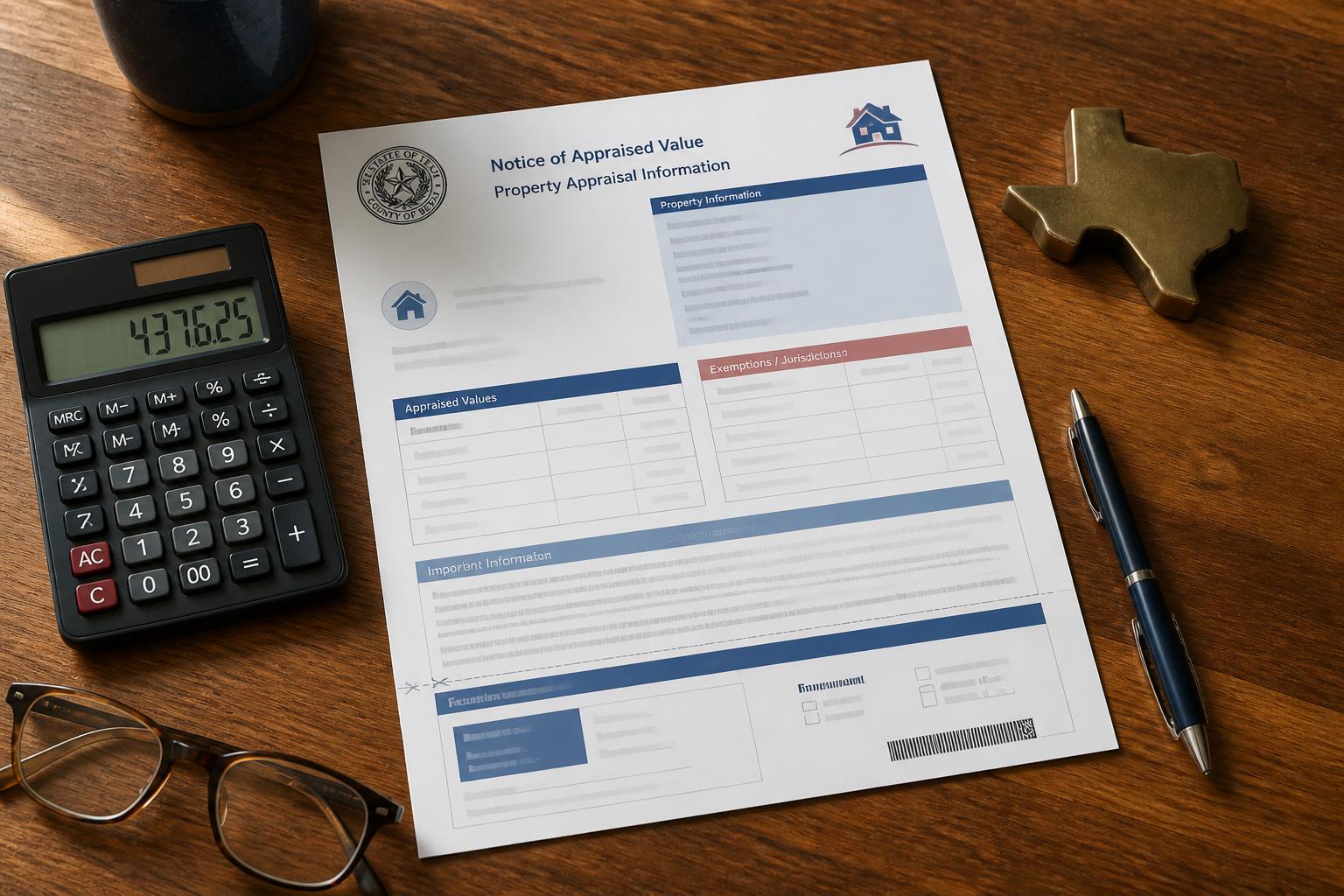
Counties re-assess properties annually, and a sale price is the strongest evidence of value an appraisal district will see. Plan for the new assessed value to land at or near your purchase price.
Effective tax rates across the San Antonio / Hill Country region typically run 1.8–2.6% depending on overlapping districts. Pull the actual rate for the parcel — don't assume.
Underwriting the right number
Model year-one taxes at purchase-price × effective rate, not the seller's current bill. The gap can easily be $4–10K per year on a $300K property.
Protests, exemptions, and ag valuations
Protest valuations every year. Maintain ag/wildlife exemptions on qualifying land. Investors who treat the tax bill as fixed leave significant money on the table over a hold period.
Next read: How to Buy Your First Rental Property in San Antonio
The Texas property-tax reality that under-models 40% of first-time investor deals
Texas has no state income tax, which is one reason capital keeps flowing into Texas real estate. It pays for that with some of the highest property tax rates in the country — combined effective rates of 2.0–2.8% of assessed value are normal across Bexar, Kendall, Comal, and Hays counties. On a $400,000 investment property, that's $8,000–$11,000 a year, and it is the single most under-modeled line item in first-time investor pro-formas.
The trap is that most investors run their numbers off the seller's current tax bill. That bill reflects the seller's assessed value — which, for a long-term owner, is often 30–50% below what the county will reassess to after your purchase closes. Texas reassesses on transfer. Your first tax bill as the new owner can be dramatically higher than the last bill the seller paid, and the cap rate on the deal moves with it.
Before you make any offer in Texas, run this checklist: pull the current assessed value from the county appraisal district, calculate your likely reassessed value at approximately your purchase price, apply the local combined tax rate, and use that number — not the seller's number — in your underwriting. If the deal still works, you have a deal. If it doesn't, you found out for the price of ten minutes instead of the price of a year of losses.
Key takeaways
What to remember.
- Re-assess to purchase price when underwriting — every time.
- Pull the actual effective rate for the parcel, not a regional average.
- Protest annually. Protect ag/wildlife exemptions on land.
FAQs
Frequently asked questions.
How much do Texas property taxes go up after a sale?
Often substantially. The appraisal district typically resets value toward the recorded sale price, and the next year's bill reflects that reset.
Are there exemptions for investment property?
Investment property doesn't get the homestead exemption. Land may qualify for ag or wildlife valuations; commercial property may qualify for select abatements in some jurisdictions.
Should I protest my property tax valuation every year?
Yes. Costs are low and the cumulative savings over a hold period are typically significant. Many investors use a contingency-fee property tax consultant.