Rental Properties · 14 min read · Updated June 2026
San Antonio Investment Property Guide for First-Time Investors
San Antonio is one of the most forgiving entry markets in Texas for first-time real estate investors: diverse rental demand, deep small-multifamily inventory, and price points that still allow a new buyer to acquire something that actually cash flows. This guide is the same step-by-step playbook I walk new investors through — from picking a submarket to closing the first deal — built around income-producing real estate, not speculation.
Why San Antonio works for first-time investors
San Antonio sits at the intersection of three things first-time investors need: affordable entry prices, broad rental demand, and a forgiving learning curve. Median entry prices are materially lower than Austin or Dallas, and the metro's employment base — military, medical, trades, logistics, and tourism — keeps rental demand diversified across submarkets.
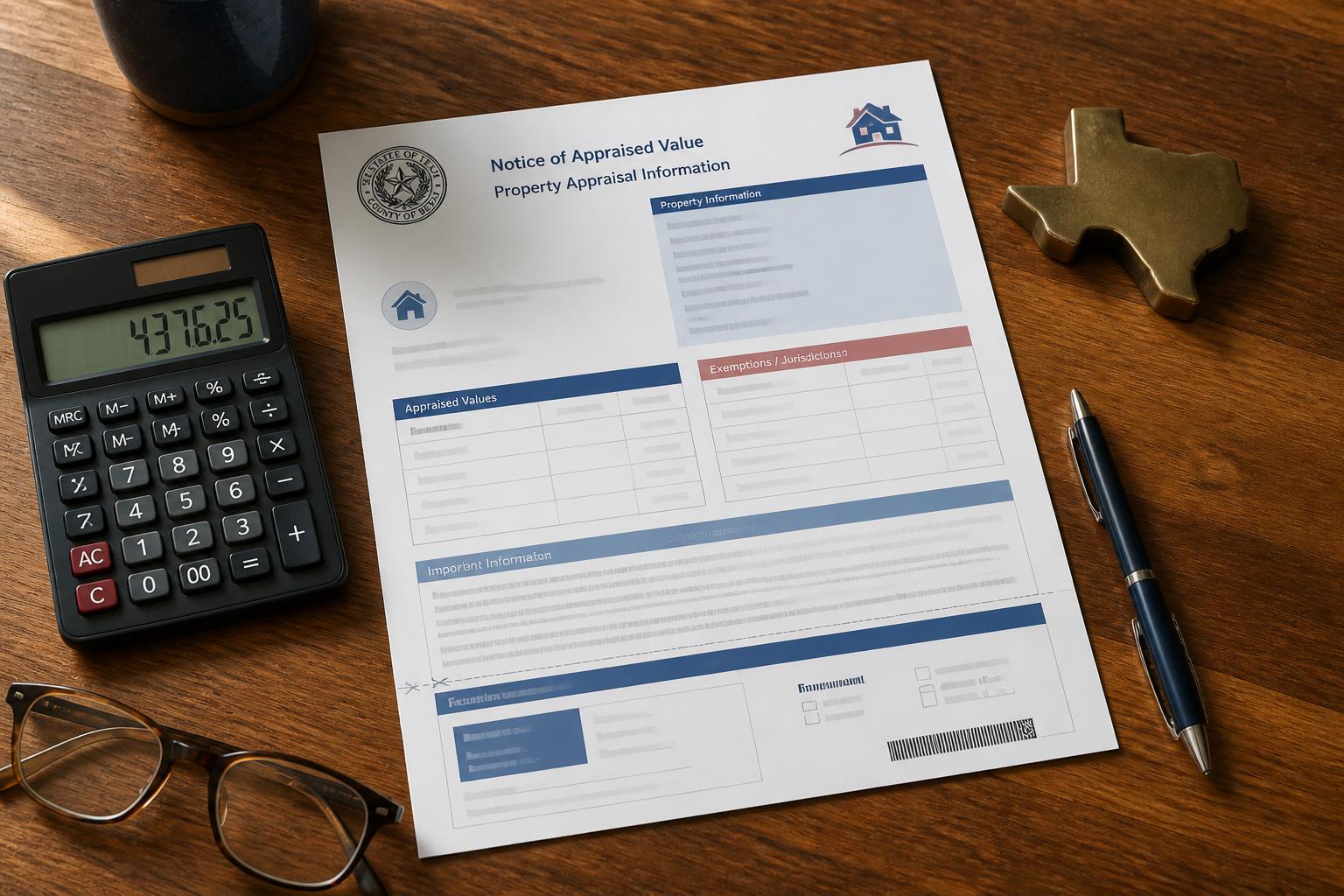
The trade-off is property taxes. Texas has no state income tax, so counties lean heavily on property tax to fund services. A first-time investor who underwrites on the seller's current tax bill, not the re-assessed value, will routinely overstate cash flow by $150–$400 per month. Get this one number right and most of your underwriting risk disappears.
Who this guide is for
Buyers acquiring their first 1–4 unit income-producing property in Bexar, Comal, Kendall, or surrounding Hill Country counties. House-hackers, out-of-state investors, and local W-2 professionals making a first real estate allocation will all find the framework directly usable.
What this guide does not cover
Large multifamily syndications, commercial retail/office, and fix-and-flip speculation are out of scope. For those asset classes, start with the asset-specific guides under property types and book a strategy call before writing any offers.
Pick a submarket that matches your investment goal
Submarket choice is downstream of your goal. Cash-flow-first buyers and appreciation-first buyers shop in different parts of San Antonio — confusing the two is the most common first-time investor mistake.
Cash-flow submarkets
Pockets near Loop 410, the Northwest Side, parts of the South Side, and near-base areas (JBSA-Lackland, Randolph, Fort Sam) continue to pencil for cash-flow buyers in 2026. Cap rates on stabilized small rentals typically land between 5.5% and 7.0%.
These submarkets reward operators who can manage tenant turnover, screen carefully, and budget realistic CapEx. They do not reward buyers who expect rapid appreciation.
Appreciation-leaning submarkets
Stone Oak, the edges of Alamo Heights and Terrell Hills, and the Boerne / Helotes / Fair Oaks Ranch corridor in the Hill Country trade lower in-place yield for stronger long-term price growth and tenant quality. Expect cap rates in the 4.0%–5.5% range and longer average tenancies.
The drive-the-block rule
Before you write an offer in any submarket, drive your top three picks at 7 a.m., 6 p.m., and 9 p.m. on a weekday. Rent comps tell you what tenants pay; a drive tells you why. Schools, traffic, condition of neighboring properties, and night-time foot traffic shape your real vacancy and turnover assumptions.
Financing your first San Antonio investment property
Financing dictates which deals are actually buyable, so set this up before you start touring. The two-lender rule is non-negotiable: get one quote from a local Texas bank or credit union and one from an investor-focused national lender that offers DSCR product.
Conventional investor loan
Plan for 20–25% down, ~3% closing costs, and 3–6 months of PITI reserves. Rates run 0.5–0.75% above owner-occupant rates. Best fit for buyers with strong W-2 income and clean DTI.
DSCR loan
Qualifies on the property's debt-service-coverage ratio, not your personal income. Useful for self-employed buyers or anyone planning to scale beyond 4–5 properties. Expect slightly higher rates and a 1.0–1.25 DSCR minimum.
House-hack with owner-occupant financing
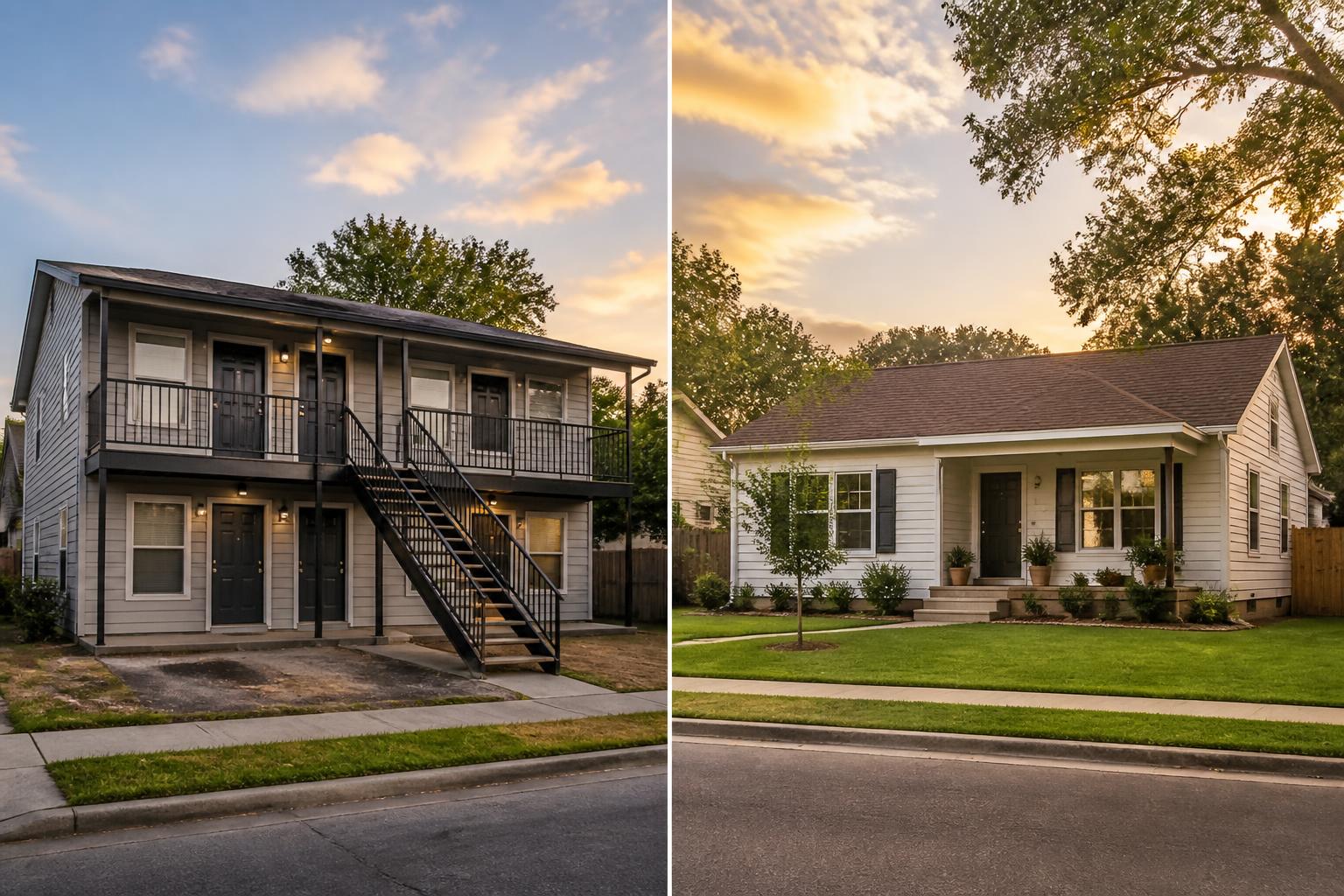
Buying a duplex, triplex, or fourplex you live in for 12 months unlocks FHA (3.5% down) or conventional owner-occupant (5% down) financing. This is the single fastest way for a new investor with limited capital to enter the market — the math on a San Antonio fourplex with three rented units is often the most forgiving deal a first-time investor will ever underwrite.
Underwrite the property, not the listing
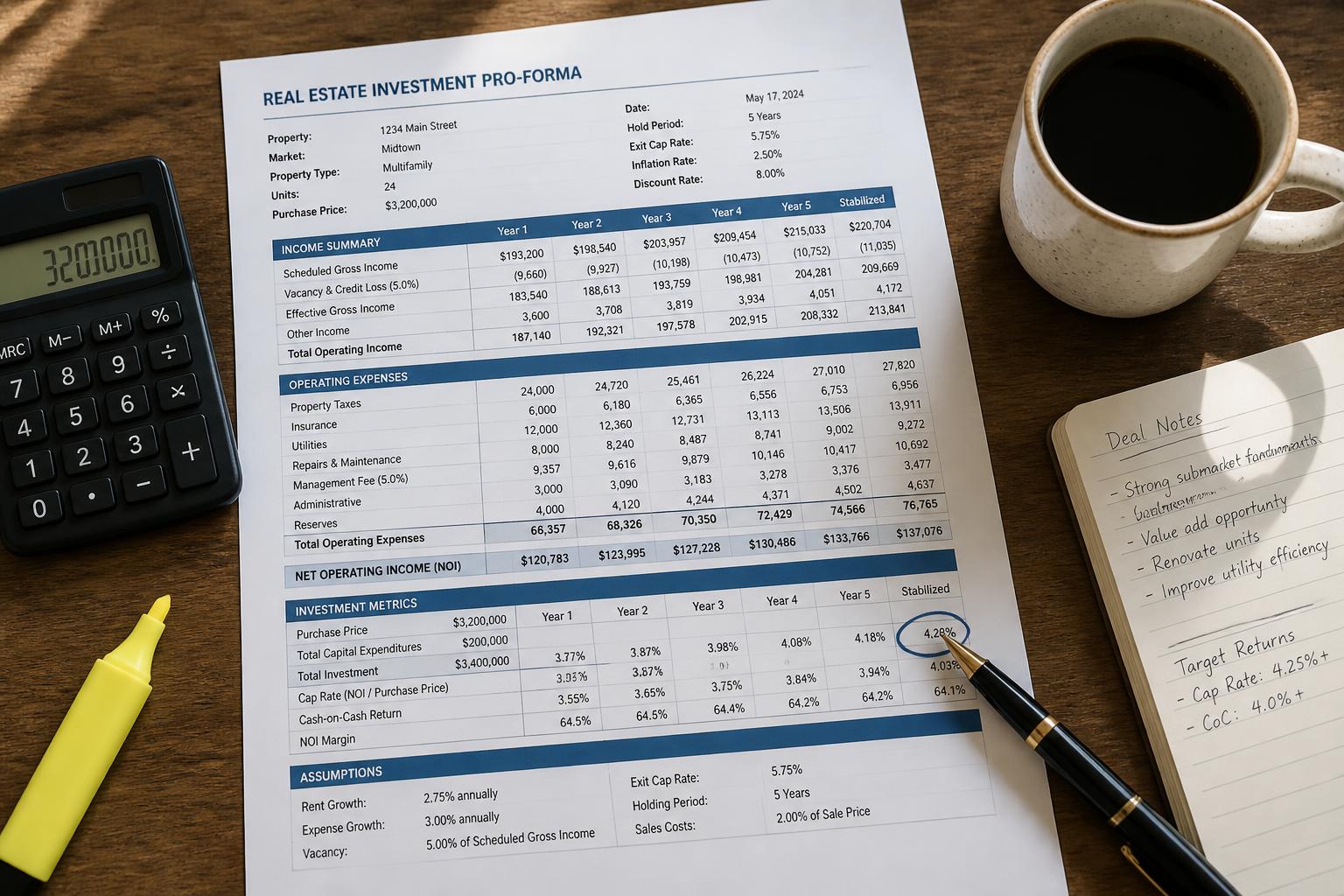
Listing remarks and seller pro formas exist to sell the property. Your job is to underwrite the actual building. Use the same repeatable model on every deal so you can compare opportunities apples-to-apples.
Income side
Gross scheduled rent verified against at least three active rental comps within a one-mile radius and the same bed/bath count. Apply 5–8% vacancy. Add realistic other income (laundry, pet, parking) only if there's a paper trail.
Expense side
Property taxes modeled at the re-assessed value (purchase price × current effective rate). Insurance quoted on the actual address, not a percentage rule of thumb. Management fee of 8–10% included even if you self-manage — your time has a cost. Repairs and maintenance at 5–8% of gross rent. CapEx reserve at $200–$400 per unit per month depending on age and condition.
Return metrics that matter
Cap rate (NOI / purchase price) for stabilized comparison across deals. Cash-on-cash return (annual pre-tax cash flow / total cash invested) for your personal yield. DSCR (NOI / debt service) for lender qualification and downside stress-testing. If the deal does not hit your minimums at conservative assumptions, it is not a deal — it is a hope. Walk away.
Use the Texas option period like an investor
The Texas option period is your paid, unrestricted right to terminate. First-time investors routinely waste it by running diligence sequentially. Run it in parallel from day one.
Days 1–3
Order the general inspection, foundation evaluation, and sewer scope (especially on pre-1985 homes). Request the seller's last 12 months of utility bills, current lease(s), tenant ledger, and any service contracts.
Days 4–7
Walk the property with a contractor for a repair-budget bid. Re-verify rent comps with the inspection report in hand — sometimes deferred condition reframes the achievable rent. Confirm insurance binder and final rate.
Days 8–10
Negotiate repairs or price based on findings. Send your re-underwrite to the lender. Make the keep-or-walk decision in writing, not in your head.
Closing and the first 90 days as an owner
Closing is not the finish line. The first 90 days of ownership set the operational baseline that compounds for years.
Week 1
Transfer utilities, change locks, send tenant introduction letter (if occupied) with new payment instructions. File the homestead exemption only if you're house-hacking and occupying — never on a pure rental.
Weeks 2–6
Complete deferred maintenance from the inspection report. Set up bookkeeping (separate bank account, separate credit card, property-specific accounting). Document baseline condition with date-stamped photos in every room.
Weeks 7–12
If vacant, list at market rent with professional photos. If occupied at below-market rent, plan the rent-increase notice schedule that complies with the lease and Texas law. Calendar the next property tax protest window.
Common first-time investor mistakes to avoid
Most failed first deals fail in predictable ways. Avoid these and you remove roughly 80% of avoidable downside.
Underwriting on the seller's tax bill. Skipping the contractor walk during option period. Buying for appreciation in a cash-flow submarket. Stretching reserves to make the down payment. Self-managing from out of state without a local boots-on-the-ground contact. Ignoring foundation, roof, and sewer on properties built before 1985.
Key takeaways
What to remember.
- Name the goal (cash flow vs. appreciation) before you browse a single listing.
- Get two lender quotes — local bank and national DSCR lender — before underwriting anything.
- Re-assess property taxes to the purchase price; never trust the seller's bill.
- Run option-period diligence in parallel, not sequentially.
- Keep 3–6 months of PITI reserves untouched after closing.
FAQs
Frequently asked questions.
What's the minimum capital to start investing in San Antonio in 2026?
Roughly $50–80K for a $250–300K rental at 20–25% down with closing costs and 3–6 months of reserves. House-hacking a small multifamily with FHA or owner-occupant conventional financing can lower this to $20–35K all-in.
Which San Antonio submarkets cash flow best in 2026?
Pockets of the Northwest Side, South Side, and near-base areas (JBSA-Lackland, Randolph, Fort Sam) continue to pencil for cash-flow buyers. Cap rates typically land between 5.5% and 7.0% on stabilized small rentals.
Should I buy a single-family or a small multifamily first?
Small multifamily generally cash flows harder per dollar of equity and lets you spread vacancy risk across multiple units. Single-family offers a broader resale exit pool and easier owner-occupant financing. Match the choice to your management appetite, time horizon, and whether you'll house-hack.
How do property taxes work for first-time investors in Texas?
Texas counties re-assess at purchase price, not the seller's prior basis. Bexar County's effective rate runs roughly 2.0–2.5% depending on jurisdiction and exemptions. Investment properties do not qualify for the homestead exemption or the 10% homestead cap — model the full re-assessed bill in year one.
Do I need an LLC to buy my first investment property?
Most first-time investors buy in their personal name to access conventional or owner-occupant financing, then evaluate an LLC structure once they own two or three properties. Talk to a Texas CPA and attorney before deciding — the right answer depends on your asset profile and umbrella insurance.
How long does a typical first investor purchase take in San Antonio?
From accepted offer to close, plan on 30–45 days for conventional financing and 21–30 days for DSCR. Add 2–6 weeks of property search before that, depending on inventory and how disciplined your criteria are.