Rental Properties · 6 min read · Updated June 2026
Small Multifamily vs. Single-Family Rentals in Texas
The single-family vs. small-multifamily decision shapes how a Texas portfolio scales. Both work. The right answer depends on your capital, time, and tolerance for management complexity.
Cash flow profile
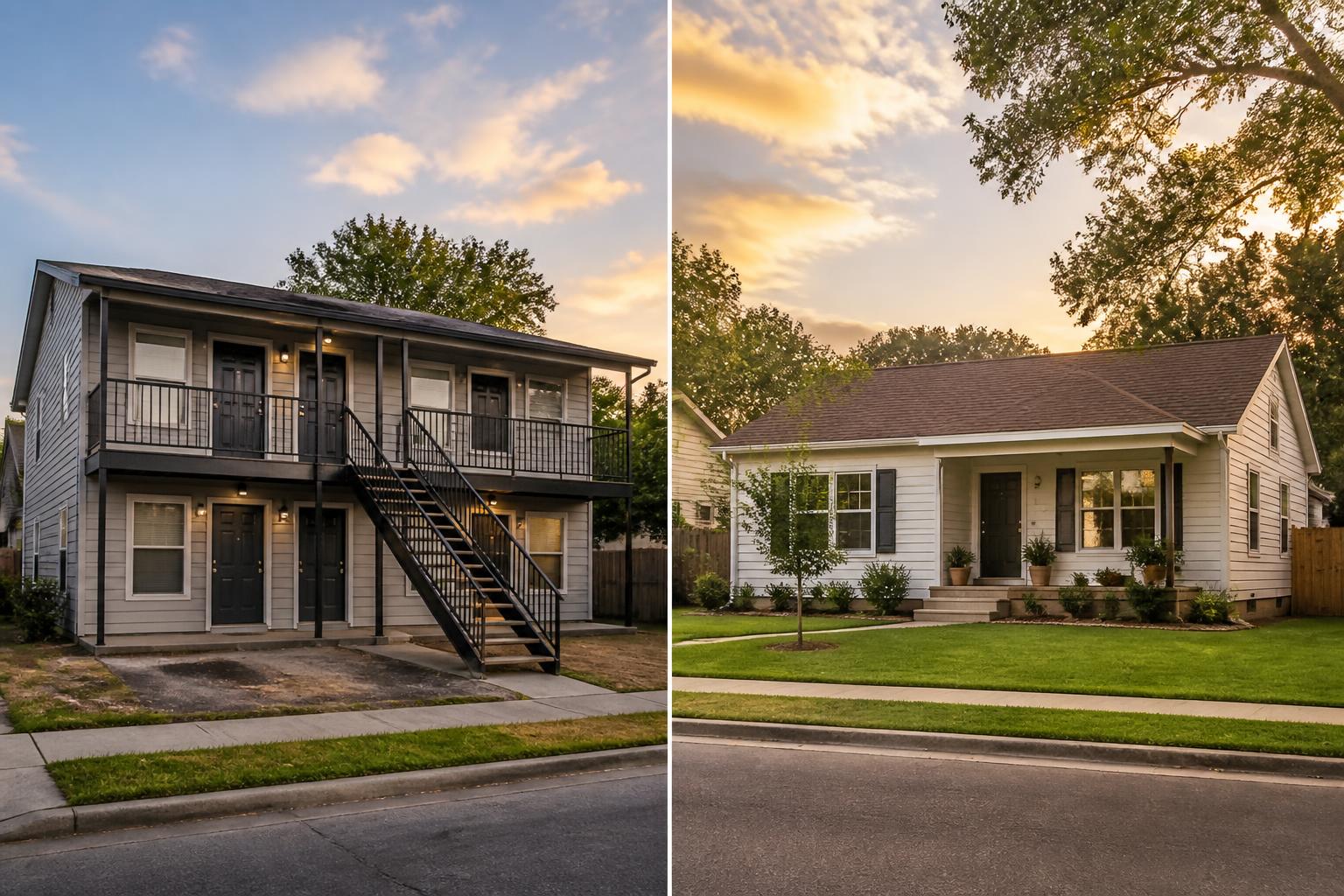
Small multifamily (2–4 units) typically cash flows harder per dollar invested because of unit economies and shared maintenance. Single-family rentals offer steadier appreciation in better neighborhoods.
Financing differences
2–4 unit properties qualify for residential financing — even with house-hacking, the down payment can be as low as 3.5–5%. 5+ unit deals shift to commercial loans with higher down payments and shorter amortizations.
Management intensity
Multifamily concentrates maintenance and turnover. Single-family is geographically dispersed and tenant turnover is less frequent but more expensive when it happens.
Next read: How to Buy Your First Rental Property in San Antonio
Exit options
Single-family resells to both investors and owner-occupants, broadening the buyer pool. Multifamily resells to investors only — pricing follows cap rates more strictly.
How a Texas investor should actually choose between single-family and small multifamily
The single-family versus small multifamily question in Texas rarely has a clean answer, because the two asset types solve for different constraints. Single-family rentals are easier to finance, easier to sell to a retail buyer at exit, and typically produce lower gross yields but stronger appreciation. Small multifamily (2–10 units) trades exit liquidity and financing flexibility for stronger cash flow, faster portfolio scaling, and better operating leverage per dollar of capital deployed.
For a first income property, the honest answer is: whichever one you can actually finance, operate, and hold through a bad year. A house-hacker with a 5% down FHA loan on a Texas fourplex has a stronger risk-adjusted position than the same investor stretching to 25% down on a single-family. But a passive investor with a full-time job and no operating experience is usually better served by one clean single-family rental in a Class B neighborhood than a duplex that needs turnover work.
The scale question flips around unit five. Between 5 and 25 units, small multifamily gives you dedicated management economics, real value-add levers on rents and expenses, and a buyer pool that underwrites on cap rate rather than comparables. That is where most Texas investors who start with single-family eventually migrate — not because SFR stopped working, but because multifamily started working better.
Key takeaways
What to remember.
- Multifamily wins on cash flow per dollar; SFR wins on exit flexibility.
- 2–4 units retain residential-loan terms; underrated structural advantage.
- Manage your time honestly — both models have hidden hours.
FAQs
Frequently asked questions.
Is a duplex a good first investment in San Antonio?
Often yes. Duplexes in San Antonio frequently allow owner-occupant financing, lower the personal capital requirement, and build hands-on management experience without the complexity of a 4-plex.
Do I need a property manager for a small multifamily?
Not always. Many investors self-manage their first 2–4 unit building for 12–24 months to learn the operational reality before delegating.
Which has better tax treatment?
Both qualify for depreciation and standard rental deductions. Larger multifamily can support cost segregation studies more economically — usually meaningful above $500K basis.